What to know about “black triangles”

fixing black triangles between teeth

What to know about "black triangles"

black triangles between teeth22 August 2022 | By Dr. Eric Meyer

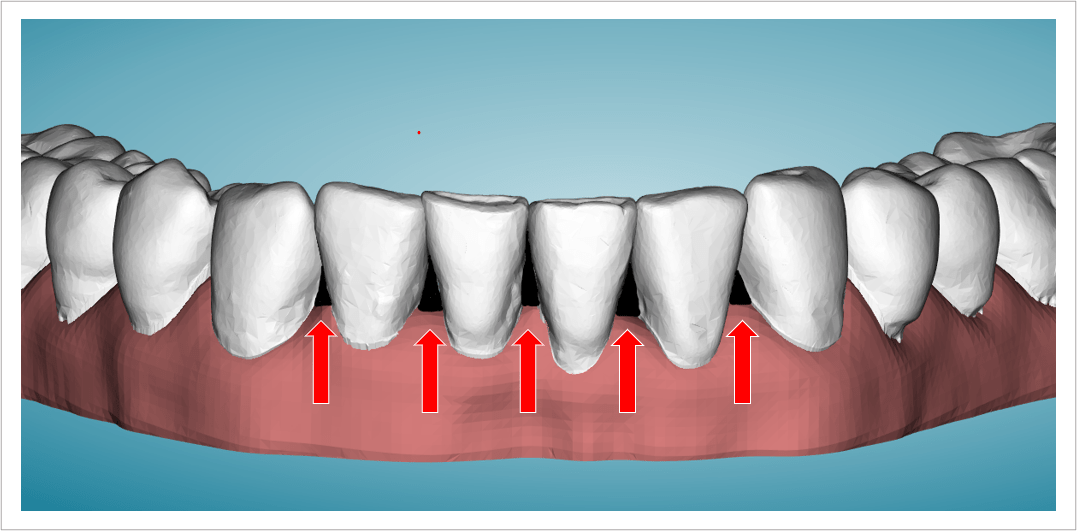
Black triangles, also known as “open gingival embrasures,” are the spaces found below the contacts of adjacent. As the gum tissue does not fill in that space it appears as a dark triangle following the taper of the teeth in contact. These tend to be very annoying, as they are not only unesthetic, but they also trap food. Ever feel like you’re always checking your phone camera to see if you have some food between your teeth? Not fun, right?

What causes black triangles?

To get all “science” on you for a moment, the results of a classic 1992 study by Tarnow et al. showed that “when the measurement from the contact point to the crest of bone was 5 mm or less, the papilla was present almost 100% of the time. When the distance was 6 mm, the papilla was present 56% of the time…” 

What this means is that you have to have a certain height of bone beneath the contact points of adjacent teeth to support the gum tissue. These pesky spaces are the result of inadequate bone levels between teeth. As bone levels fall around teeth the gumline follows which creates the open embrasure we see as a dark triangle. 

The bone level is affected by many things. For example, poor oral hygiene results in poor periodontal health and reduced bone levels. Another example is crowding, or crooked teeth. These teeth generally have lower contact points, that are closer to the bone. When these teeth are straightened the contact points rise, however, the bone level remains the same and a black triangle appears. A reduced periodontium can also be apart of aging. As we get older our bone levels around our teeth may drop and contribute to black triangles.

How do you fix black triangles?

Adding bone between teeth would be the most ideal way, but grafts typically do not lead to a stable results. So, we have to come up with other ways.

  • Restoration by a dentist to build up teeth and “fill in” the black triangle with restorative material.
  • Orthodontics with Interproximal reduction (or filing) between teeth, which drops the contact point and pushes the gum tissue into the black triangle as the result space is closed.
  • Orthodontics to correct the malignment of teeth causing a higher than normal contact point.
  • Injections with hyaluronic acid to increase the volume of the gum tissue, which has found to work only temporarily.
  • Soft tissue gum graft, which is difficult and may not completely resolve the black triangle.
 
In conclusion, black triangles are the result of reduced bone levels relative to the contact point of adjacent teeth. They can often be eliminated or reduced in size by restorative treatment, orthodontics, and periodontics. The best practice is prevention to avoid them with good oral hygiene including brushing and flossing! For more information on addressing black triangles feel free to contact us.
 
-Dr. E

Relapse: Help! My teeth have shifted!

teeth shifted after braces

Relapse: Help! My teeth have shifted!

25 July 2022 | By Dr. Eric Meyerteeth shifted

So you’re finally done with orthodontic treatment. You’ve spent the money and the time for your friendly orthodontist to take off those braces or finish those clear aligner trays. They give you a retainer with a set of instructions and you are the happiest person alive!

Days or months go by and your retainer is gone! Maybe your dog ate it? Perhaps the waiter threw it away with your napkin?

Teeth will shift without retainers

Give it time and your teeth will shift. The degree of relapse will vary from person to person. Some individuals will experience very little shifting, while others significant movement. It’s a matter of stability. My wise professor always told us, “the most stable malocclusion is the initial malocclusion.” What he meant was the greater we deviate from the original alignment of your teeth the less stable the resulting outcome of treatment. Patient’s with very complex malocclusions and extremely difficult cases will need greater consideration after treatment (in general). We may even consider a “fixed” retainer, which is a small wire glued to the tongue side of your teeth in the event you do not wish to have a removeable retainer. Regardless of where you started, you and I would prefer to keep things the way we left them when we finished treatment! 

What are your options now?

Your greatest fear may be going through another short phase of braces, but really this is a great time to consider a few clear aligners to get you back on track. Our retainers just so happen to be “Invisalign” style, clear retainers, so consider these “active” retainers. If you think that your teeth have shifted after orthodontic treatment come see us. We’d be happy to get you back to a straight smile! For more information on treating relapse with clear aligners click here or call us at 563-556-2353

-Dr. E 

Invisalign ®: A clear alternative…

invisalign clear aligners at dubuque orthodontics

Invisalign®: A clear alternative...

18 July 2022 | By Dr. Eric Meyer
invisalign clear aligners at dubuque orthodontics

It’s the year of 2022. 

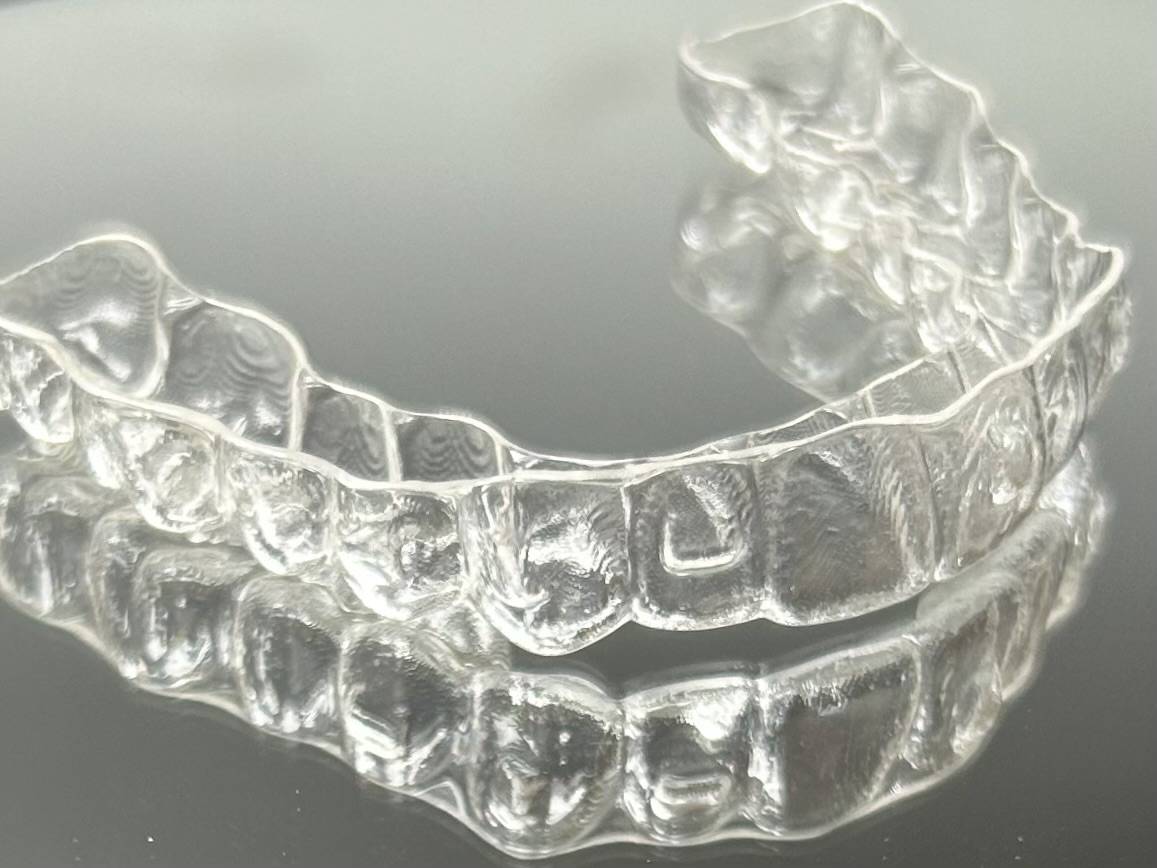
Self-driving cars are not too far away, Elon Musk is sending re-usable rocket ships into outerspace, and we’re still moving teeth with metal? Not so fast! Align technology launches Invisalign® clear aligners in the late ’90s, howeverrrr, it’s first product is not even close to the efficiency and control that braces offer. Fast forward 20 years and the plastic is much better, the understanding of the force systems are well-studied, and features such as “attachments” (tooth colored bumps that are bonded to teeth) allow for added control. 

So are we there yet? Although it’s come along way, studies have shown that Invisalign still lacks the control that braces offer with certain tooth movements, as well as cases with higher complexity. For example, moving roots is very difficult to do with the plastic trays. This is the kind of tooth movement that would be required in an extraction case where the roots need to move to close extraction spaces. We don’t have to worry about the predictability with wires and brackets. As you already know, braces are stuck to your teeth, so you don’t have a choice. With clear aligners, you are responsible for keeping the clear trays in (for 22 hours each day I might add).

On the other hand, clear aligners allow us to digitally move teeth and even avoid moving certain teeth. For example, if a patient wants to straighten their front teeth and has a great bite in their back teeth we can maintain them that way. That is much harder to do with braces where the outcome is not precisely controlled by a sophisticated computer software and almost all teeth get a bracket. What I really like about clear aligners is the fact that patients can much better floss and brush as they are removeable. 

In summary, braces and clear aligners both have their own pros and cons. Not every patient is a candidate for clear aligners. In patients that are good candidates, Invisalign® works wonderfully. If you have a very complex case don’t worry, though! We can still predictably treat complex cases with a short phase of braces to work out the tough tooth movements, then finish with clear aligners. You get the best of both worlds!

For more information on Invisalgn®, click here, or call our office to schedule a free evaluation!

-Dr. E